Our Story
Our Story:
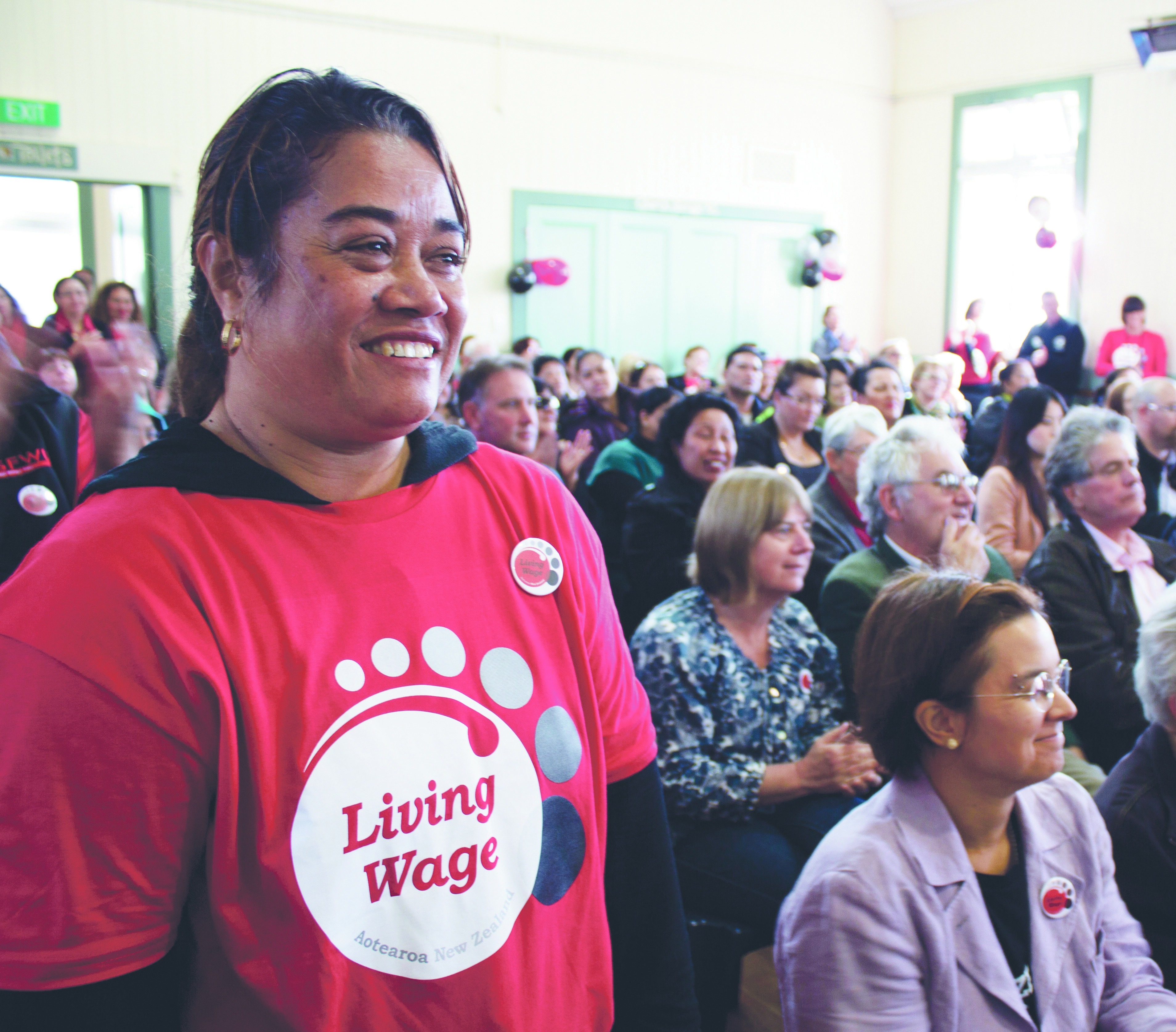
The Living Wage Movement emerged in Aotearoa 2011 as a response to poverty wages.
The idea was initiated by the Service and Food Workers Union (now E tū), but the movement quickly grew to include other unions, faith groups and community organisations.
The aim of the new movement was to unite organisations around the goal of lifting the wages of low-paid workers, like contracted cleaners, who were struggling to get by, working as much as 70 hours a week just to try and make ends meet. Increasingly these workers were becoming the working poor, in a country that had once been one of the most equal countries in the OECD.
In 2012 a new movement united around a common concern about the impact of poverty wages on workers, their whānau and their communities was launched in Auckland — Living Wage Movement Aotearoa NZ. A Wellington launch was held a few months later and the new movement spread across the country.
In 2013 the first Living Wage rate was identified by independent experts at the Family Centre Social Policy Centre. The rate was set as the amount needed to ensure workers and their families could live in dignity and participate in society. This rate is updated annually by the average movement in wages as recorded by Stats NZ, with a full review every five years.
In 2014 an accreditation programme was established to ensure those claiming to be Living Wage Employers pay all their workers the full Living Wage rate, including workers employed via contractors. Living Wage accreditation became the benchmark of a good Employer.
As a direct outcome of the people power behind Living Wage campaigns, the wages of thousands of low-paid workers in wealthy corporates, local and central government, small-to-medium employers and NGOs have been lifted to the Living Wage.